Telephone: +86-187-1379-6222 WhatsApp: +8613785726449 Phone: +86-0317-8301268 Email: btxthb@china-xintian.cn

Please Choose Your Language


Views: 0 Author: Site Editor Publish Time: 2026-07-03 Origin: Site


A bag dust collector is a machine that helps clean the air in your factory. It traps dust inside special fabric bags. Dusty air goes into the system. The air passes through the bags. Clean air comes out after that. In Vietnam factories, good air is important for workers’ health. Bad air can cause:
Breathing and heart problems that make people work less
More days when your team is sick
People feeling bad from ‘Sick Building Syndrome’
Bag dust collectors help you make your workplace safer and healthier.
Bag dust collectors make air cleaner in factories. They keep workers safe from dust that can cause health problems. Picking the right filter bag material is very important. It helps collect dust well and makes the system last longer. Regular maintenance is needed. This means checking filter bags and cleaning the system. It keeps the system working well and saves money. There are different bag dust collectors for different factory needs. Choose one based on the kind of dust and how big the factory is. Factories must follow air quality rules. Bag dust collectors help meet these rules and stop fines.
A bag dust collector helps clean dirty air in factories. The system pulls in air with dust and moves it through filter bags. These bags catch the dust and let clean air go out. Many factories use this system to keep workers safe and follow rules for clean air.
Here is a simple table that shows what is inside a bag dust collector and how it works:
Definition | Main Components |
|---|---|
A bag dust collector uses fiber filter bags to filter dust-laden gas, making sure the air that comes out is clean and safe. | 1. Fiber filter bags (made to handle heat and not rust) |
There are different types of baghouse dust collectors. Each type has its own way to clean the bags. The table below shows two common types and what makes them different:
Type of Baghouse | Cleaning Method | Efficiency and Application |
|---|---|---|
Pulse Jet Baghouses | Uses bursts of air | Cleans filters better but costs more because it needs air. |
Mechanical Shaker Baghouses | Shakes the bags | Cheaper for small jobs but does not clean as well as others. |
You pick a baghouse dust collector based on what your factory needs. Pulse jet baghouses are good for places with lots of dust. Mechanical shaker baghouses work for smaller factories with less dust.
You choose the right fabric for your bag dust collector by looking at the kind of dust and how hot it gets in your factory. Each fabric has its own good points:
Cotton fabric is cheap and filters well. It can burn and gets wet easily.
Wool fabric lets air move and stays clean. It costs more and does not like heat.
Synthetic fabric lasts longer and saves money. Nylon is best for hot places.
Fiberglass fabric can handle heat from 150°C to 250°C. It is used where there is a lot of dust and heat.
The fabric you pick changes how well your bag dust collector works. Factories with hot air or sticky dust need special bags. Picking the right fabric helps your system last longer.
Tip: You can talk to Botou Xintian Environmental Protection Equipment Co., Ltd. experts for help picking the best fabric bag dust collector for your factory. Their team can help you find the right material for your dust and temperature.
Factories in Vietnam use fabric bag dust collectors in many jobs. You see these systems where dust is a problem for people and machines. The table below shows where baghouse systems are used and what dust they catch:
Industry | Typical Dust Types |
|---|---|
Cement plants | Dust from kilns, crushers, and grinders |
Power plants | Ash and dust from coal and burning |
Steel and foundries | Dust in blast furnaces and sintering |
Chemical plants | Dust from mixing, packing, and making chemicals |
Animal feed production | Dust from blending, moving, and packing food |
Pharmaceuticals | Dust in mixing and packing medicine |
HVAC systems | Dust in air ducts and machines |
Woodworking shops | Dust from saws, sanders, and other tools |
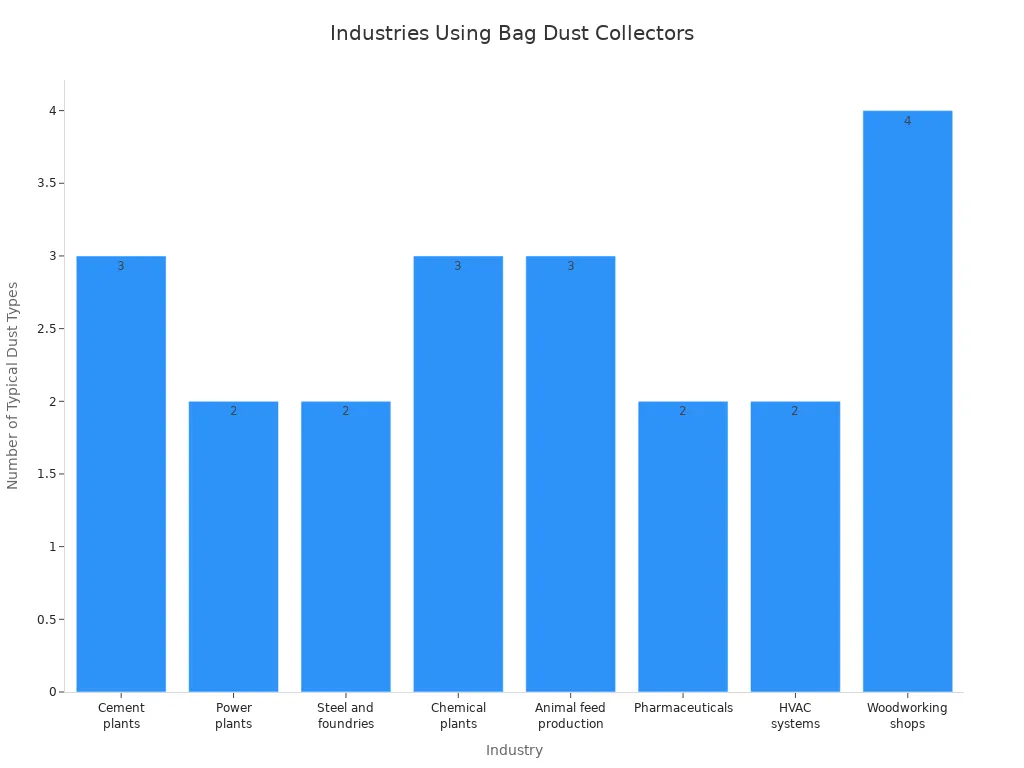
You find fabric bag dust collectors in cement plants, power plants, steel factories, and woodworking shops. Each place has its own dust problems. Using the right baghouse system keeps workers and machines safe.
When you put in a fabric bag dust collector, your factory gets cleaner and safer. You also follow the rules for clean air. If you need help picking or fixing your baghouse, Botou Xintian Environmental Protection Equipment Co., Ltd. can help factories in Vietnam.
You need to understand how a fabric bag dust collector works to keep your factory air clean. The system starts when dust-laden air enters the baghouse. The air flows through special fabric bags. These bags trap dust and let clean air pass out.
The filtration process uses several steps to catch dust:
Inertial Impaction – Large dust particles cannot follow the airflow. They hit the fibers in the filter bags and get stuck.
Interception – Smaller particles move with the air. When they touch the fibers, they stay there.
Brownian Motion – Very tiny particles move in random paths. This movement helps them bump into the fibers and get trapped.
Electrostatic Attraction – Some dust and fibers have static charges. These charges pull dust onto the fibers and hold it there.
This step-by-step process helps the fabric bag dust collector reach high filtration efficiency. The dust cake that forms on the bags over time makes the system even better at catching fine particles.
You can see how baghouse systems compare to other dust collectors in the table below:
Criteria | Baghouses | Cyclone Separators | Cartridge Collectors |
|---|---|---|---|
Efficiency | High (99%+ for fine particles) | Moderate (good for larger particles) | High (95-99% depending on the filter material) |
Baghouse filters work best for fine dust. They remove more than 99% of small particles. Cyclone separators do not catch fine dust as well. Cartridge collectors also work well, but baghouse systems handle bigger jobs and tougher dust.
Note: The design of a baghouse lets a dust cake build up on the bags. This dust cake helps the system trap even more dust. The type of fabric and the cleaning method, like pulse jet cleaning, also affect how well your system works.
Industrial blowers play a key role in the working principle of fabric bag dust collector systems. You use blowers to move dust-laden air into the baghouse. The blower creates a strong airflow. This airflow pushes dirty air through the filter bags.
You need the right size blower for your factory. If the blower is too weak, dust will not reach the bags. If it is too strong, it can damage the bags or waste energy. The blower also helps keep the air moving after cleaning, so your factory always has fresh air.
Tip: Always check the blower’s power and speed. This helps you keep your fabric bag dust collector running smoothly and saves energy.
Regular maintenance keeps your fabric bag dust collector working well. You need to check the filter bags often. Dust builds up on the bags and can block airflow. If you do not clean or change the bags, the system will not trap dust as well.
Here are some simple steps for good maintenance:
Inspect filter bags for holes or wear.
Clean the bags using the system’s cleaning method, like shaking or pulse jet.
Check the blower for dust buildup or damage.
Empty the dust hopper before it gets full.
Look for leaks in the housing or air ducts.
If you follow these steps, your baghouse will last longer and keep your air clean. You will also avoid costly repairs and downtime.
Note: Many factories in Vietnam trust Botou Xintian Environmental Protection Equipment Co., Ltd. for help with maintenance and choosing the right baghouse system. Their experts can help you keep your fabric bag dust collector in top shape.
By understanding the working principle of fabric bag dust collector systems, you can make better choices for your factory. You protect your workers, meet air quality rules, and keep your machines running well.
It is important to know the main parts of a bag dust collector. All the parts work together to remove dust from the air. The table below shows what each part does:
Component | Contribution to Dust Removal |
|---|---|
Dust Filter Bag | Captures dust particles from the air, ensuring clean air output. |
Dust Filter Cage | Provides structural support for the filter bag, enhancing durability. |
Electromagnetic Pulse Valves | Trigger cleaning cycles to remove accumulated dust from the filter. |
Ash Discharge Valve | Facilitates the removal of collected dust and ash from the system. |
The housing keeps everything in place. The inlet brings dirty air inside. The outlet lets clean air go out. The filter bag and cage are the most important parts. The ash discharge valve helps you get rid of dust easily.
You need to pick the right filter bag for your dust collector. Most filter bags are between 2 and 3.5 meters long. The usual diameters are 130mm or 160mm. Filtration accuracy is usually from 1 to 5 microns. The filter bag catches dust on its surface. Over time, a dust cake forms and helps trap more dust. There are many types you can choose from:
Filter Bag Type | Key Features |
|---|---|
PPS Dust Filter Bag | Excellent chemical resistance, high-temperature tolerance, anti-hydrolysis, and abrasion resistance. |
PTFE Dust Filter Bag | Handles temperatures up to 260°C, superior dust capture for demanding applications. |
Nomex (Aramid) Filter Bag | Heat-resistant, anti-chemical abrasion, ideal for dryers, asphalt plants, cement kilns. |
Acrylic Dust Filter Bag | Acid-resistant, moisture-proof, low dust adhesion. |
Moisture-Resistant Filter Bag | Made from fine polyester fibers, ideal for high-humidity environments. |
Anti-Static Filter Bag | Prevents static discharge in explosive dust environments. |
FMS + P84 Filter Bag | Heat and chemical resistant, flexible and durable under harsh conditions. |
PE500 Dust Filter Bag | Filters particles from 1 to 10 microns, corrosion and heat-resistant. |
You must clean the filter bag to keep your dust collector working well. There are three main ways to clean the bags:
Shaker systems use a machine to shake the bags. These are used in small factories.
Pulse jet systems use blasts of air to clean the bags. These are best for big factories and can run all day.
Reverse air systems use gentle air to clean the bags. These are good for places with lots of air and dust.
Tip: For pulse jet systems, check the air pressure often. For shaker systems, make sure belts are tight and oil the bearings. For reverse air systems, watch the dampers and fans.
There are three main types of bag dust collectors you can use:
Type of Bag Dust Collector | Description | Best Suited Industries |
|---|---|---|
Shaker Baghouse | Mechanical shaking for cleaning; requires frequent maintenance. | Low-volume operations, woodworking shops. |
Reverse Air Baghouse | Uses low-pressure air for cleaning; handles large airflow volumes. | Power generation, cement manufacturing, steel mills, foundries. |
Pulse Jet Baghouse | Uses compressed air pulses for cleaning; low maintenance and continuous operation. | Food processing, chemical processing, pharmaceutical manufacturing, plastics industries. |
You should choose the type that fits your factory’s needs. If you need help picking the right bag dust collector, Botou Xintian Environmental Protection Equipment Co., Ltd. can give you advice and support in Vietnam.
You want your workers to have clean air. Bag dust collectors help remove dangerous dust from the air. The baghouse traps tiny particles before they reach people. This lowers breathing problems and keeps everyone safe. Cleaner air means fewer sick days and more work gets done. Machines also stay safe from dust damage. A fabric bag dust collector can really improve your factory’s air quality.
Vietnam has tough rules for air pollution. You must follow these rules or you might get fined or shut down. The government wants factories to:
Cut nitrogen oxides, sulfur oxides, and dust by 20% by 2025.
Use new equipment that makes less dust.
Switch to cleaner fuels like electricity or natural gas.
Install dust treatment systems that match your industry.
Check emissions all the time.
A bag dust collector helps you meet these rules. You can show inspectors your baghouse system keeps dust and emissions low. Using the right filter bag lets you follow the law and protect nature.
Bag dust collectors make dust collection better and save energy. If you use a baghouse with clean-on-demand features, you spend less on maintenance. You do not need to stop machines often. Picking the right filter bag and installing it well avoids costly repairs. Small baghouse units cost less to buy and run. Medium systems need more money but handle bigger jobs. You also save money on energy because the system works well.
Tip: Keep your bag dust collector maintained. This lowers costs and makes your filter bags last longer.
Bag dust collectors work in many industries. Each factory has its own dust problems. You need a baghouse that fits your needs. The table below shows how you can change your system:
Industry | Adaptation Features |
|---|---|
Cement Industry | High abrasion resistance, filters hot air dust below 150°C. |
Food Industry | Resists acids and solvents, safe for food processing. |
Pharmaceutical | Special surface treatments for better filtration and chemical resistance. |
Woodworking | Water & Oil Repellent filter bags for wood dust. |
Mining | Durable materials for harsh conditions and nonstop work. |
You can pick the right filter bag for your dust and temperature. If you need help, Botou Xintian Environmental Protection Equipment Co., Ltd. gives expert advice and support for baghouse solutions in Vietnam.
You should check a few things before picking a baghouse. First, measure how much dirty air your factory makes. Next, see how much dust comes in at the start. Look at how big and heavy the dust pieces are. These things help you pick the best filter bag and cleaning method. The table below shows what to compare:
Performance Factor | Description |
|---|---|
Airflow | Figure out airflow using dust amount and weight. |
Dust Load | Find out how much dust comes in every hour. |
Particle Size | Pick filter bag material based on dust size and type. |
Inlet Loading | Dust at the start changes how much air goes through the bag and the pressure. |
Air-to-Cloth Ratio | Smaller numbers work better for tiny dust. |
Filter Media | Choose filter bag material for your dust and work area. |
You need to pick a baghouse that fits your factory. Think about what kind of dust you have and how much. Choose a filter bag that works for your dust. Make sure the air-to-cloth ratio is right so the filter does not get too full. Think about how often you need to fix or clean the system. Check if the baghouse meets safety rules for dangerous dust. See if it can work with your other machines. Botou Xintian Environmental Protection Equipment Co., Ltd. can help you pick the best baghouse and filter bag for your factory in Vietnam.
Type and amount of dust in your factory
Air-to-cloth ratio for good dust cleaning
How much time you need for fixing and cleaning
Safety and rule checks
Works with your other machines
You need to take care of your baghouse to keep it working. Make a plan to check and fix things often. Change filter bags every few months or once a year, depending on your dust. Write down the pressure numbers every day. Make sure the cleaning system works to shake off dust. Check the hopper and dust removal parts a lot.
Look at filter bags for holes or damage.
Change filter bags when the maker says to.
Empty the dust hoppers often.
Check pressure numbers every day.
Keep the cleaning system working well.
Sometimes, you may have problems like blocked bags, holes, or high pressure. Look for leaks in the baghouse. Change broken filter bags fast. If dust does not leave the system, check the cleaning parts and hopper. Botou Xintian Environmental Protection Equipment Co., Ltd. can help you fix and keep your baghouse working well in Vietnam factories.
Tip: If you take care of your baghouse and get help from Botou Xintian Environmental Protection Equipment Co., Ltd., your baghouse and filter bags will last longer and keep your air clean.
Now you understand how bag dust collectors work. They are important for removing dust in factories. These systems filter dust very well. They are also easy to use. The table below gives more reasons to use bag filters:
Advantages of Bag Filters | Disadvantages of Bag Filters |
|---|---|
High filtering efficiency (99–99.9%) | Requires large installation space |
Handles various types of dust | Filter bag replacement cost |
Easy operation and maintenance | |
Suitable for high airflow | |
Flexible in design and application | |
Reasonable investment and operating costs | |
Sustainable and environmentally friendly |
Choose the best system for your factory. Take care of it so it works well. This keeps your factory safe and helps it run better. Your factory will also be ready for the future.
You should check filter bags every month. Replace them when you see holes or damage. Most factories change bags every six to twelve months for best performance.
Pulse jet cleaning works well for most factories. It uses bursts of air to clean bags quickly. You save time and keep your system running without stopping production.
Yes, you can use special filter bags for sticky or wet dust. Choose moisture-resistant or anti-static bags. Botou Xintian Environmental Protection Equipment Co., Ltd. experts can help you select the right bag for your factory.
Look for signs like high pressure, low airflow, or dust leaks. Check filter bags and cleaning systems often. Botou Xintian Environmental Protection Equipment Co., Ltd. offers support and maintenance services for factories in Vietnam.
You can contactBotou Xintian Environmental Protection Equipment Co., Ltd. for expert advice. Their team helps you choose, install, and maintain bag dust collectors. Visit Botou Xintian Environmental Protection Equipment Co., Ltd. for more information.


